

China Clay / Kaolin
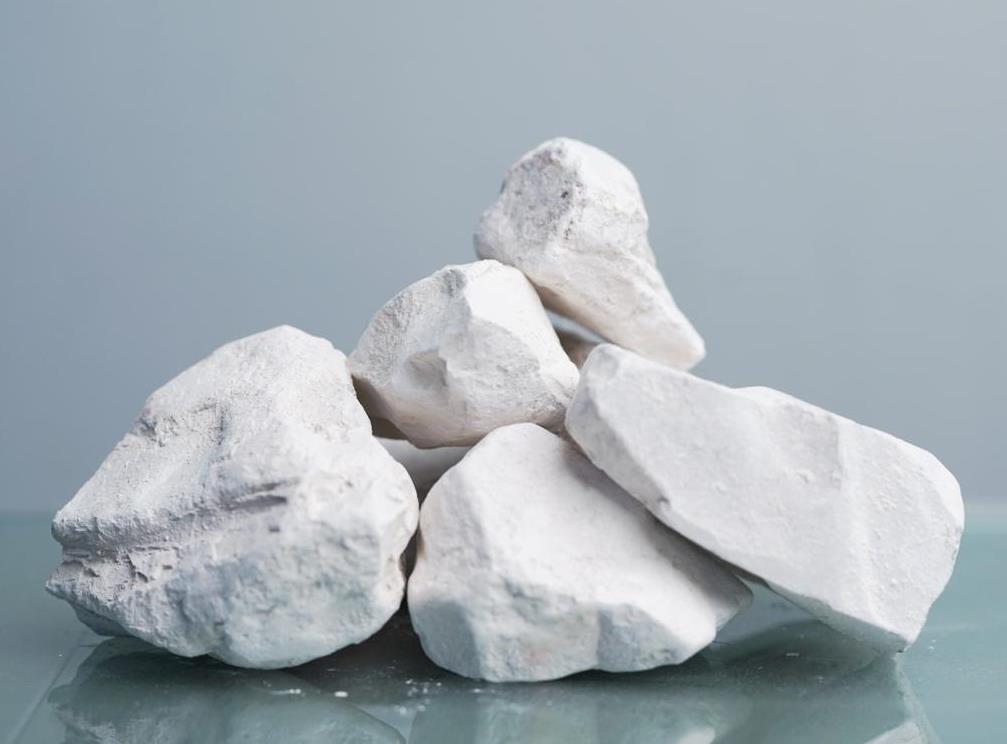
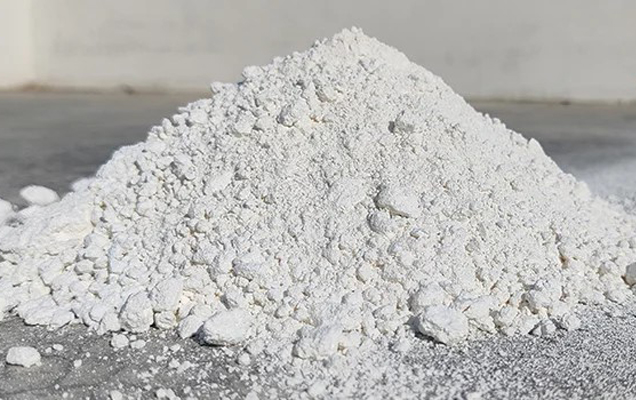
Kaolin, or China Clay, is a naturally occurring soft white clay, formed from the weathering of granite and feldspar, chemically a hydrated aluminum silicate (Al₂O₃·2SiO₂·2H₂O).
Kaolin, discovered in China’s Kiangsi province around A.D. 500, derives its name from ‘kao lin’ meaning ‘high ridge’ and was originally used for fine porcelain.
China Clay is processed into high-grade washed forms by mixing raw kaolin with water to form a slurry, followed by de-gritting, separation, filtering, and drying.
As a trusted China Clay (Kaolin) trader, we supply washed kaolin in powder, granules, and lumps for industries like ceramics, paper, rubber, paints, and adhesives, ensuring purity, consistency, and high performance.
Features
- High Purity
- Optimum Performance
- Best Flexibility of Formulation
- Superb Value
Packaging Options
- Loose
- 25 KG Bags
- 50 KG Bags
- 1 MT Jumbo Bags
Kaolin is a clay mineral (Al₂Si₂O₅(OH)₄) used across industries and naturally mined from kaolin-rich rocks. We have the capacity to supply 100,000 MT of raw kaolin per month and are a leading trader and exporter, serving overseas clients with consumption exceeding 20,000 MT, strengthening our presence in the international market.
We process raw kaolin using advanced washing systems to produce a pure grade of China Clay by removing impurities. This method, known as the levigation process, ensures a uniform kaolin grade with improved physical and chemical properties by eliminating contaminants such as silica, iron, titanium, and others, resulting in a high-purity, consistent, and accurate product.
Hydrous kaolin is known for its fine particle size, high brightness, and excellent rheological properties. We produce fine and ultra-fine grades from our premium reserves to meet the requirements of industries such as paints, paper, printing inks, paperboard, rubber, and more.
Calcined Kaolin is an anhydrous aluminum silicate obtained by heating ultrafine natural kaolin at high temperatures in a kiln. This calcination process enhances whiteness and hardness, improves electrical properties, and modifies the particle size and shape.
Fire clay is a type of refractory clay primarily used in the production of ceramics, particularly fire bricks. According to the United States Environmental Protection Agency, fire clay is broadly defined as a ‘mineral aggregate composed of hydrous aluminum silicates (Al₂O₃·2SiO₂·2H₂O), with or without free silica.
Our China Clay / Kaolin Grades
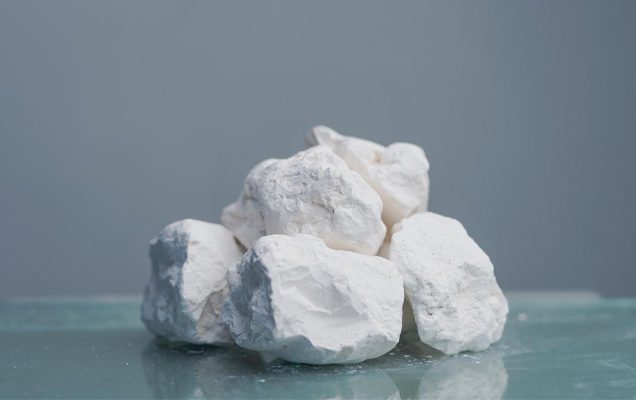
93 L VALUE
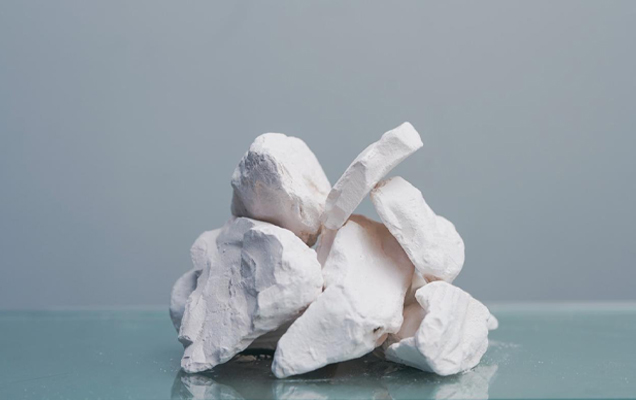
94 L VALUE
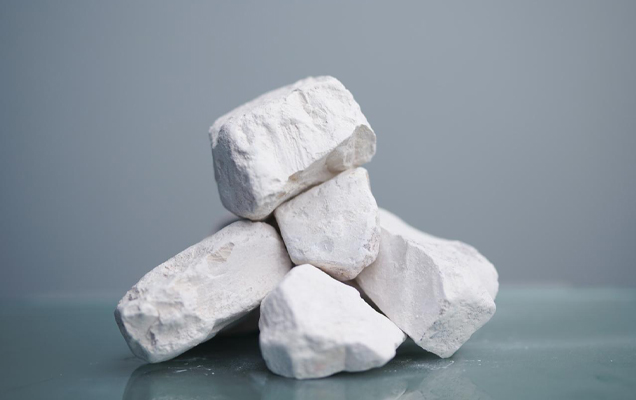
97 L VALUE
300-500 Mesh Powder
Grades Specifications
| Parameters | SM - 97 (%) | SM - 95 (%) | SM - 94 (%) | SM - 92 (%) | SM - 90 (%) | SM (%) |
|---|---|---|---|---|---|---|
| Loss on Ignition | 13.7 | 14.82 | 14.23 | 13.2 | 13.19 | 9.78 |
| Silica as SiO2 | 47.7 | 47.57 | 48.75 | 45.9 | 46.4 | 60.84 |
| lron as Fe2O3 | 0.18 | 0.22 | 0.35 | 0.4 | 0.45 | 0.7 |
| Alumina as AI2O3 | 36.99 | 36.48 | 35.68 | 35.1 | 35.2 | 26.03 |
| Potash as K2O | 0.08 | 0.035 | 0.09 | 0.067 | 0.083 | 0.39 |
| Soda as Na2O | 0.021 | 0.051 | 0.021 | 0.0396 | 0.1 | 0.25 |
| Titanium as TiO2 | 0.48 | 0.6 | 0.75 | 0.8 | 0.9 | 1.12 |
| Firing Whiteness | 92 | 90.5 | 90.1 | 89.9 | 81.6 | 78.1 |
| L-Value | 97.12 | 95.33 | 94.14 | 92.4 | 90.8 | 90.8 |
| A-Value | 0.21 | 0.46 | 0.26 | 0.65 | 0.72 | 1.3 |
| B-Value | 2.92 | 3.38 | 2.72 | 3.9 | 4.8 | 8.2 |
| Firing Colour | White | White | white | White | White | Creamish |
| Shrinkage | 4.76 | 5.8 | 5.46 | 5.2 | 7.56 | 4.6 |
| Fired Temperature °C | 1220 | 1220 | 1220 | 1220 | 1220 | 1220 |
| Water Of Plasticity | 33.9 | 35 | 35.8 | 41 | 46 | 14.52 |
| Water Absorption | 20.77 | 18.21 | 21.3 | 19.24 | 17.09 | 14.52 |
| Dry M.O.R Kg/cm 2 | 28.4 | 27.2 | 14.23 | 15 | 10 | 32.6 |
| Fired M.O.R Kg/cm 2 | 85 | 75 | 68.23 | 70 | 82.2 | 152.2 |